These are sightings from the INaturalist site. Thanks to the many contributors, especially Maevehall, Johngibson 139, Annemarievo, and Danielcahan for recording our precious animals, plants and fungi.
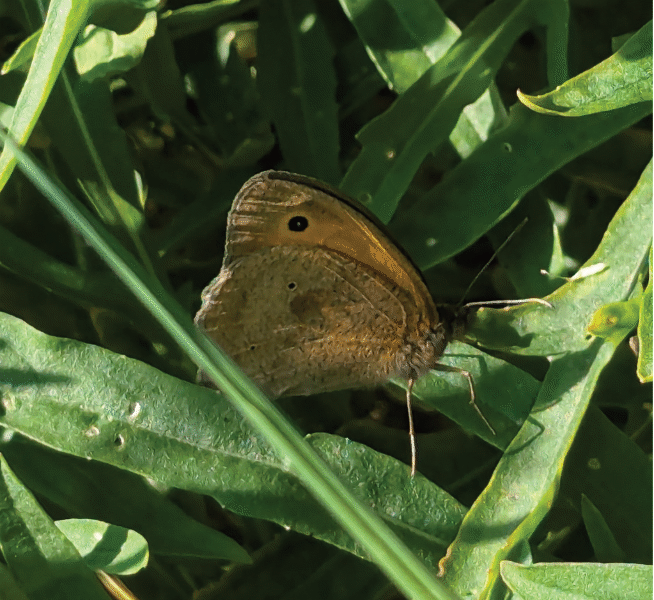
Meadow Brown Butterfly Maniola jurtina
They feed on a wide range of grasses. Those with finer leaves such as fescues (Festuca spp.), bents (Agrostis spp.) and meadow- grasses (Poa spp.) are preferred. Also Cock’s-foot.
Nectar plants are thistle, knapweed and bramble.
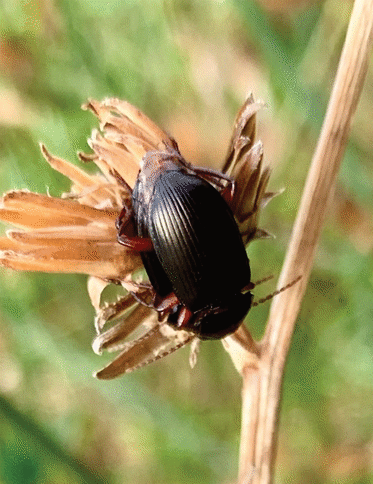
Ground Beetle Family Carabidae
The larva eats insects, adults eat seeds.
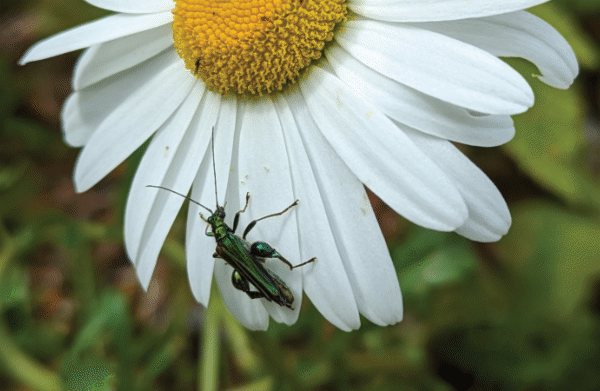
Thick-legged Flower Beetle Oedemera nobilis
This one is male, females have thinner hind legs.
Adults feed on pollen especially from oxeye daisies, cow parsley and bramble. They are pollinators.
They lay their eggs in plant stems, especially thistles where the larva over-winter.
They produce a toxin called Cantharidin used in traditional Chinese medicine and a modern anti-tumour, anti-metastasis medicine
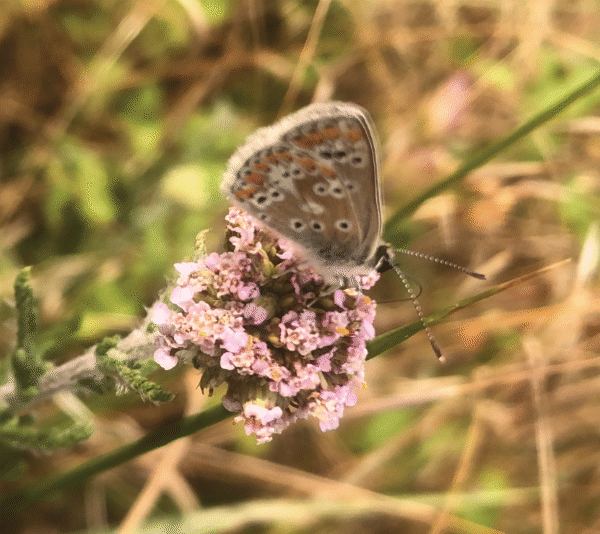
some rights reserved (CC-BY-NC)
Brown Argus Butterfly Aricia agestis
Caterpillar food plants are Common Rock-rose or Dove’s-foot Crane’s-bill. They spend winter as caterpillars hiding in leaf litter around the roots of their food plants
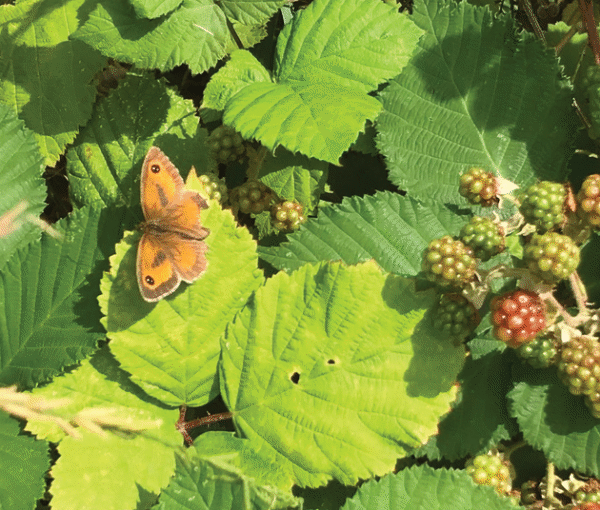
Gatekeeper Butterfly Pyronia tithonus
Favourite nectar sources include Wild Marjoram, Common Fleabane, ragworts and Bramble.
Caterpillars feed on various grasses – bents, fescues and common couch. They spend the winter as caterpillars sheltering in grass thatch.
Common Furrow Bee / Slender Mining Bee Genus Lasioglossum
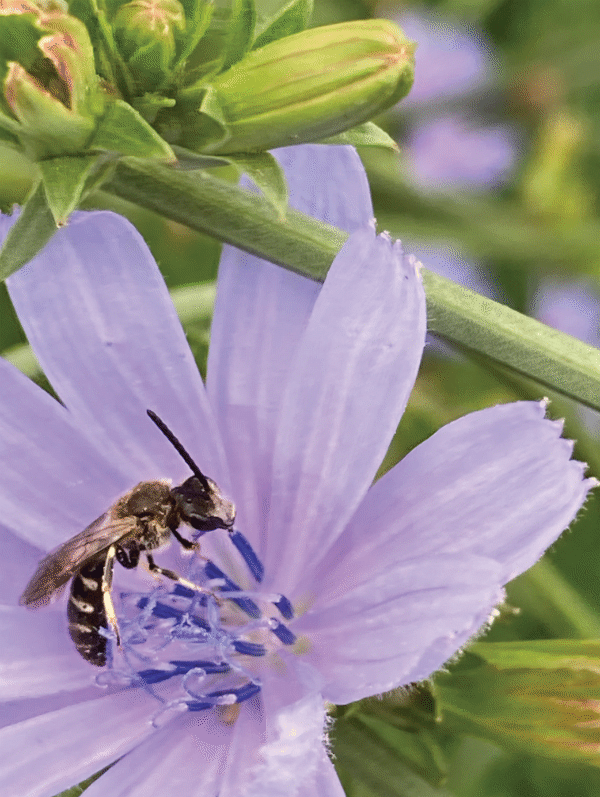
This is one of the ‘Sweat bees’ so if they land on you, they’re after the salt in your sweat. They dig tunnels underground where they lay their eggs and store a supply of pollen. They are solitary bees, but many bees may choose the same location for their nest.
To create a habitat for them make a 400mm deep bank of sand mixed with some clay against a south facing wall, or on a sunny hillside. The clay will help to retain the shape. Favourite plants are Knapweed and Mexican fleabane
As well as mining bees, the mounds could provide a habitat for carpenter bees. They need full sunshine and wooden logs or posts that have not been treated with any preservatives.